lundi 27 août 2018

Android TV in 2019: Industry trends moving forward

android tv

Android TV boxes have a lot of potential, but thanks to the mishandling by device manufacturers they may soon be outclassed by competitors. However, Google isn’t giving up just yet. In a panel consisting of leading experts from Google and Think Analytics hosted by Accedo at Broadcast Asia, we got to have a closer look at trends and recent developments affecting Android TV as a platform.

Android TV going into 2019

Reduced costs and time to market

Android TV has matured in a lot of ways over the years, and as a platform, it beats out traditional set-top boxes with the ability to be a whole lot more personal. It can integrate with many different services, and the addition of features such as voice search allows for greater opportunities down the line. As it stands, the price for an OEM to launch an Android TV box is down 60% over what it used to be a little over a year ago thanks to work done by Google to help keep costs down. These optimizations have helped bring down costs, the “time to market” for OEMs is also drastically reduced which makes launching an Android TV set-top box a lot more compelling. Receiving certification can take only 4-6 weeks to complete, and Cast integration is a lot quicker now too. Google is also working to try to find new revenue streams for device manufacturers who wish to enter the market.

Interestingly, it is also mentioned that one of the first manufacturers to take up Android TV has managed to use data analytics to offer users channels that they may want. It is apparently very successful at the moment and has drastically increased revenue from the platform for the unnamed company.

Upcoming platform features

“Voice is not just for media discovery and control,” is a great way to start this section. The Google Assistant is its own platform, it’s not just a voice control means to an end. It’s an open platform which developers can use to add voice functionality to any Android-based application. It’s not just about ordering taxis and food delivery, there are a lot more practical uses as well. A lot more Android TV devices are going to be coming out with a far-field microphone in the near future, which will allow you to call up the Google Assistant without even needing a remote anymore. It will be equivalent to a Google Home.

And that’s not all. The Google Assistant can actually be used for OEMs as well to help reduce the amount of time spent giving support. What if you could offload a huge amount of that to the Assistant? Technical questions and such can all be handled immediately – without needing to deal with wait times for a call center. Over-voice commerce and integration with your phone are also mentioned, which again will simply aim to make troubleshooting and support easier for the end-user.

In terms of other features, there will be a lot more languages coming to Google Assistant in the Fall. USB video camera integration is also being worked on as a standard feature of Android Pie.

Project Treble and Android TV

First and foremost, the cutoff date for new devices launching with Android Oreo will be December 15th. That means that any set-top boxes launching after that must launch with Android Oreo. That not only ensures that users will get the latest and greatest features Android has to offer, but that they will all have Treble compliant devices. Treble has made development a whole lot easier for engineers working on these TV boxes, and as such the time for devices to update should be a whole lot faster.

Android TV going forward

It’s clear that the platform has matured a lot and a huge amount of changes are already on their way. While at first it may have seemed that Google was neglecting Android TV, there are new features and improvements being worked on every day. Interestingly, Google appears to be focusing a whole lot more on the enterprise capabilities of the platform – not just the personal, daily use of a normal customer. We’ll be keeping an eye out for these (and more) upcoming changes.


from xda-developers https://ift.tt/2BPtrRJ
via IFTTT

YouTube gets Digital Wellbeing tools, shows time spent watching videos

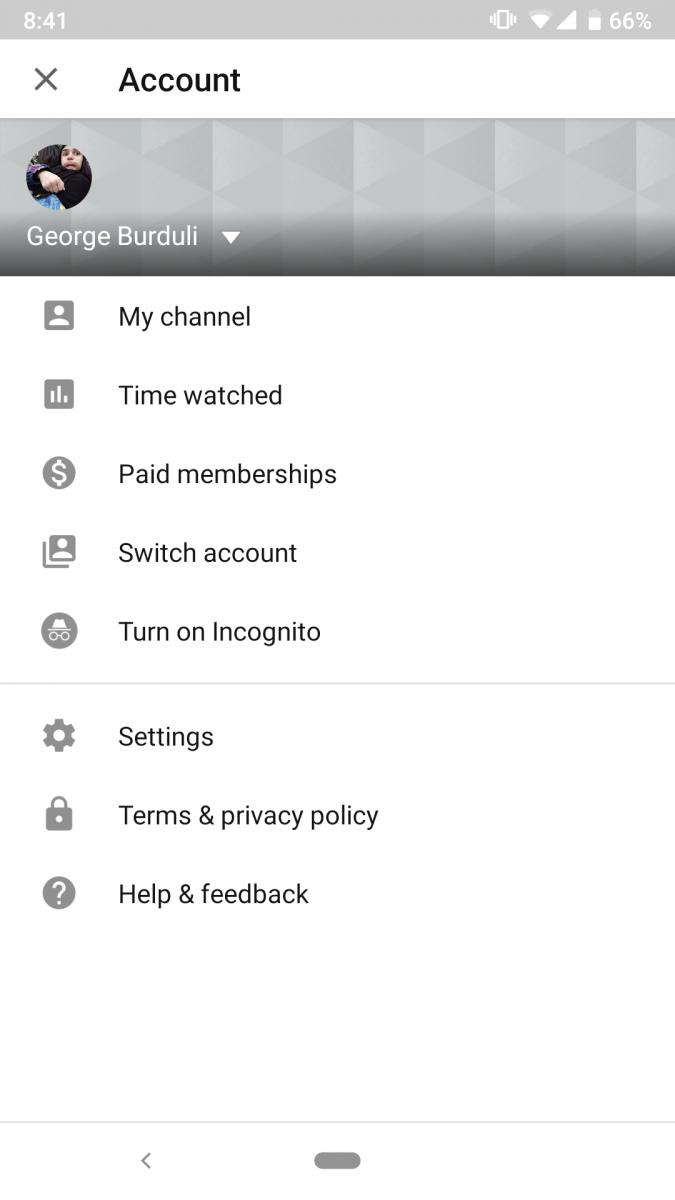
Google announced Digital Wellbeing tools at Google I/O 2018. Today, they decided to add some of these tools to the YouTube application. I discovered the “Time watched” category when I was doing my daily routine of checking if the dark mode is available for me (it’s unfortunately not). The category can be found under your account, which is located at the top right corner.

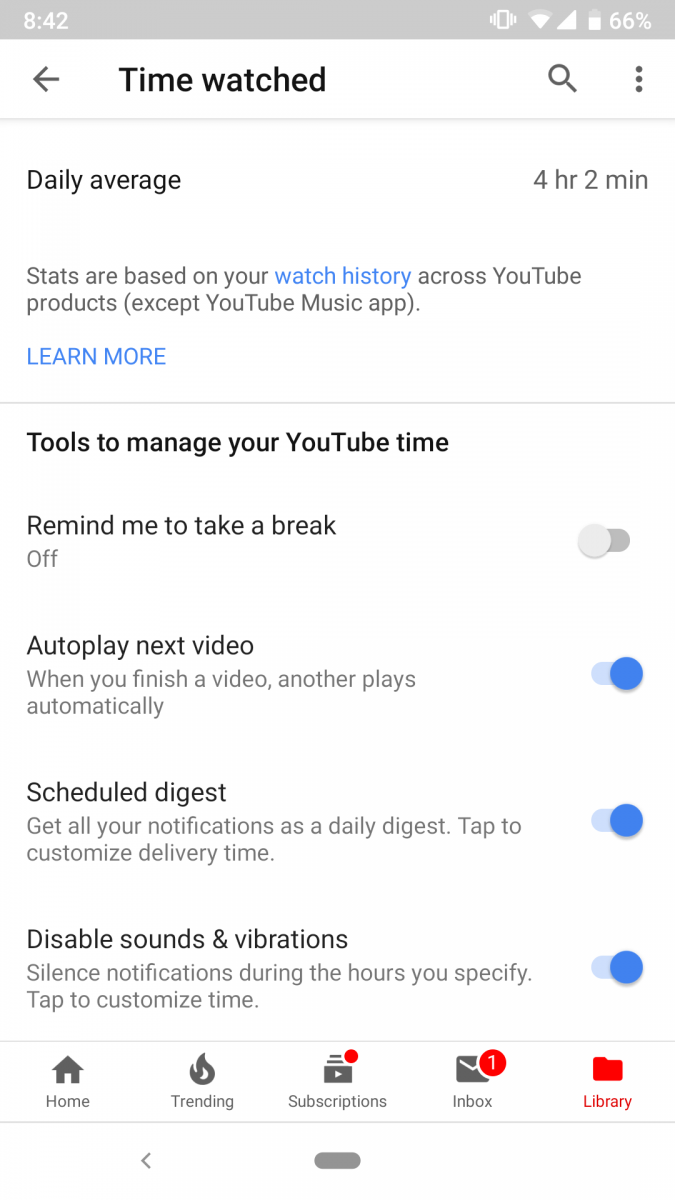
After taping on Time watched, YouTube didn’t hesitate to show me how productive my weekend was. You can see how much time you spent on watching videos today, yesterday, or last week. It can also calculate the daily average. Fortunately, you can also let YouTube remind you to take a break in your desired frequency.

Scheduled digest has also moved to the same page. It still can be found under the Notifications category in Settings, but it’s still nice to see all Digital Wellbeing tools together. If you don’t already know, Scheduled Digest shows you only one notification a day from your subscriptions. Digital Wellbeing tools also include disabling sounds and vibrations. It was activated for me by default.

As you may have already noticed, I was in a desperate need of these tools. I don’t know if I can resist tapping “dismiss” every time I get a “take a break” pop-up, but it will definitely prevent me from binge-watching 10 hours worth of videos. The feature is activated server-side, so you don’t have to download an APK or wait for some magical update, unlike the dark mode.


Via: Official YouTube Blog


from xda-developers https://ift.tt/2MTMcHH
via IFTTT

Use the Power of AI to Learn a New Language with Mondly

Learning a new language is one of the best things you can do to keep your brain active and healthy. It also makes traveling to your favorite foreign destination far more enjoyable. But most people who try learning a new language give up far too soon, since the most popular language-learning platforms rely on antiquated techniques that utilize monotonous and boring word repetition.

Mondly offers a far more efficient and enjoyable path to learning a new language, and a lifetime subscription is available for over 90% off at $69.99.

Mondly’s revolutionary approach to language education uses state-of-the-art speech recognition technology to listen to your words and phrases and offers positive feedback if you’re on the right track. This means you can focus on your weak spots without wasting time going over the elements of the language you’ve already mastered.

You’ll also benefit from Mondly’s growing roster of professional voice actors, a verb conjugator, and recorded conversations between native speakers in the language of your choice.

Your lifetime subscription lets you choose five languages from a sweeping list of options that includes English, Afrikaans, Arabic, French, German, Hebrew, Japanese, and more.

Don’t give up on learning your dream language. A lifetime subscription to Mondly is available for just $69.99—over 90% off its usual price.


from xda-developers https://ift.tt/2NjEB2e
via IFTTT

Xiaomi Pocophone F1 launches globally in 65 countries

Xiaomi Pocophone F1, Xiaomi Poco F1

The Xiaomi Pocophone F1 definitely turned some heads of enthusiasts and regular customers. The reason is this sub-$300 phone has some top of the line specs, like Snapdragon 845, 6GB/8GB RAM, 64/128/256GB internal storage, 4,000 mAh battery, and a lot more. Some even called it the OnePlus killer as it’s more affordable. Xiaomi Poco F1 launched in India on the 22nd of August. Today, Xiaomi announced the global availability of the device, in a total of 65 countries.

Unfortunately, for some of the readers, the Pocophone will not be available in the US or Canada. Liliputing was kind enough to provide the price of the phone in different markets. Even though some of them are about 25% more expensive than the original price, Poco F1 still keeps the spot in the sub-300 market. Here is the price breakdown in different markets:

  • €329 (~$380) and up in France
  • 2,800 (~$360) HKD and up in Hong Kong
  • 17,990 PHP (~340) and up in the Philippines
  • 4,499,000 IDR (~$310) and up in Indonesia
  • 1,237 MYR ($~300) and up in Malaysia

If you’re interested in the country availability, the POCOPHONE Global Twitter account posted it earlier today. As you see from the photo below, US and Canada didn’t get any love. This is not the first time for the Chinese manufacturer to leave them out, whether it’s their choice or not.

Xiaomi Poco F1 ticks a lot of boxes for a lot of people. The phone features the latest top of the line specs, wide availability, affordable price tag, and lot more. But, as many phones in 2018, it’s not perfect. It has a big notch and lacks NFC and OIS. These features are rarely used in developing countries like India and others, so that’s probably why Xiaomi cheaped out on them.

Still, if you’re looking for a device that looks and feels like a flagship, but has a very low price, the Xiaomi Pocophone F1 is a hard to beat option.


Source: POCOPHONE Global


from xda-developers https://ift.tt/2wuTZSl
via IFTTT

Language Navi translates foreign language apps without root [Giveaway]

Language Navi

Have you ever found a cool application that you wished was available in your own language? If your answer is yes, Language Navi has your back. The app helps you translate any application to any language that Google Translate supports. It works on-the-fly and you don’t need root or any kind of system modifications. It just uses built-in accessibility settings in the Android OS, plus some OCR (Optical Character Recognition) magic to recognize the text and Google Translate to translate it.

XDA Junior Member tachibanalab released the app on Play Store about a month ago. It is absolutely free, but if you want to remove ads and unlock some advanced features (that the developer is working on), you’ll have to pay $2.99. Lucky for you, we have a 100 free promo codes to give away.

Since the initial release of the app, it has gained some new features. First of all, it now supports Android 6.0 Marshmallow. Originally, the app only worked on Android 8.0 Oreo and above. It’s good that the developer managed to backport the features. The application now also has 11 new languages, as well as various major and minor bug fixes. Language Navi’s Pro version can be bought via in-app purchase. It should be noted that the developer used XDA Translators group to translate the application into various languages.

The promo codes will be posted in the comments every five minutes or so. To redeem a code, go to the Play Store, open the menu and select “Redeem.” Paste in the code to get the app. Good luck!

Language Navi - Translator (Free+, Google Play) →


from xda-developers https://ift.tt/2BYcR1M
via IFTTT

Google Pixel 3 may be officially unveiled on October 9th

Google Pixel 3 XL Clearly White

While pretty much everything about the Pixel 3 XL is out in the open, we don’t actually know when it (or its smaller variant) will be announced. Many assumed that for the third year in a row we’d be seeing an October 4th launch, but a report from Bloomberg actually suggests that to be incorrect. According to the report, Google intends to launch the new Google Pixel devices at a media event in New York City on October 9th. Previously, the Pixel devices were launched in San Francisco.

Given that it’s Bloomberg, there’s no real reason to doubt the report. That’s not all we expect to see announced at the time, either. According to WinFuture, we could well be seeing the introduction of not one, not two, but three new Google Pixel smartwatches. Interestingly, they’re set to launch only a short while after the next Snapdragon Wear OS chip is set to release as well. Alongside those as well, notable leaker Evleaks has said that we may also see the introduction of a Pixelbook 2018 edition. While we don’t know a lot about the Pixelbook launching this year, we can make some guesses as to what its specifications may be.

With the cat out of the bag in terms of everything related to the Google Pixel 3 XL, it’s not as if the company can really give us any more surprises. Obviously, the smaller Pixel 3 hasn’t been leaked anywhere yet, but it’s expected like always to be the same specs – just smaller. The change of location from San Francisco to New York is sort of interesting, along with the change of launch date from previous years. We’ll be keeping an eye out to see if any other information regarding the new Pixels comes up, and we’ll be sure to let you know.


Source: Bloomberg


from xda-developers https://ift.tt/2ogbFgK
via IFTTT

Win a OnePlus 6 from RhinoShield

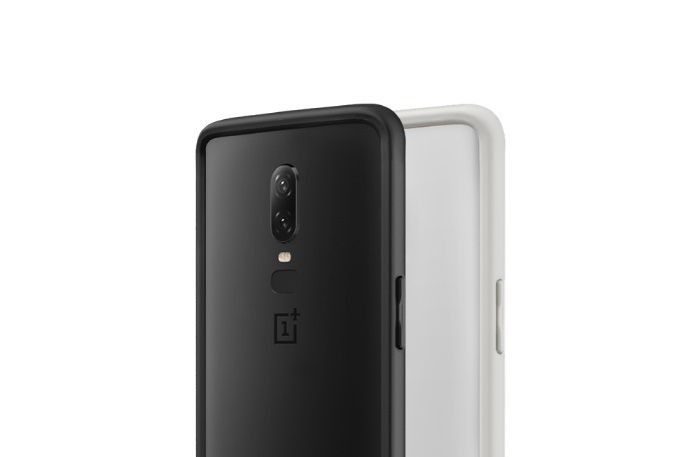
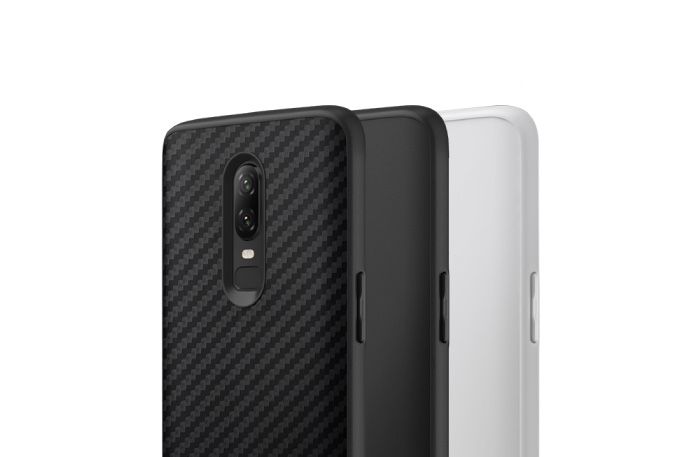
RhinoShield is teaming up with XDA to offer our readers a chance to win a new OnePlus 6 phone. RhinoShield is heavily focused on offering the best protective solutions for the OnePlus 6 with their SolidSuit, CrashGuard, and Screen Protector products. We recently got a hands-on look at their product line-up that you can check out here.

Win a OnePlus 6 from RhinoShield!

CrashGuard Bumper for OnePlus 6

SolidSuit Case for OnePlus 6


Shop RhinoShield
We thank RhinoShield for sponsoring this post. Our sponsors help us pay for the many costs associated with running XDA, including server costs, full time developers, news writers, and much more. While you might see sponsored content (which will always be labeled as such) alongside Portal content, the Portal team is in no way responsible for these posts. Sponsored content, advertising and XDA Depot are managed by a separate team entirely. XDA will never compromise its journalistic integrity by accepting money to write favorably about a company, or alter our opinions or views in any way. Our opinion cannot be bought.


from xda-developers https://ift.tt/2PJup4X
via IFTTT